
.png)
Innovator Backstory: The Why and How of Business Craft
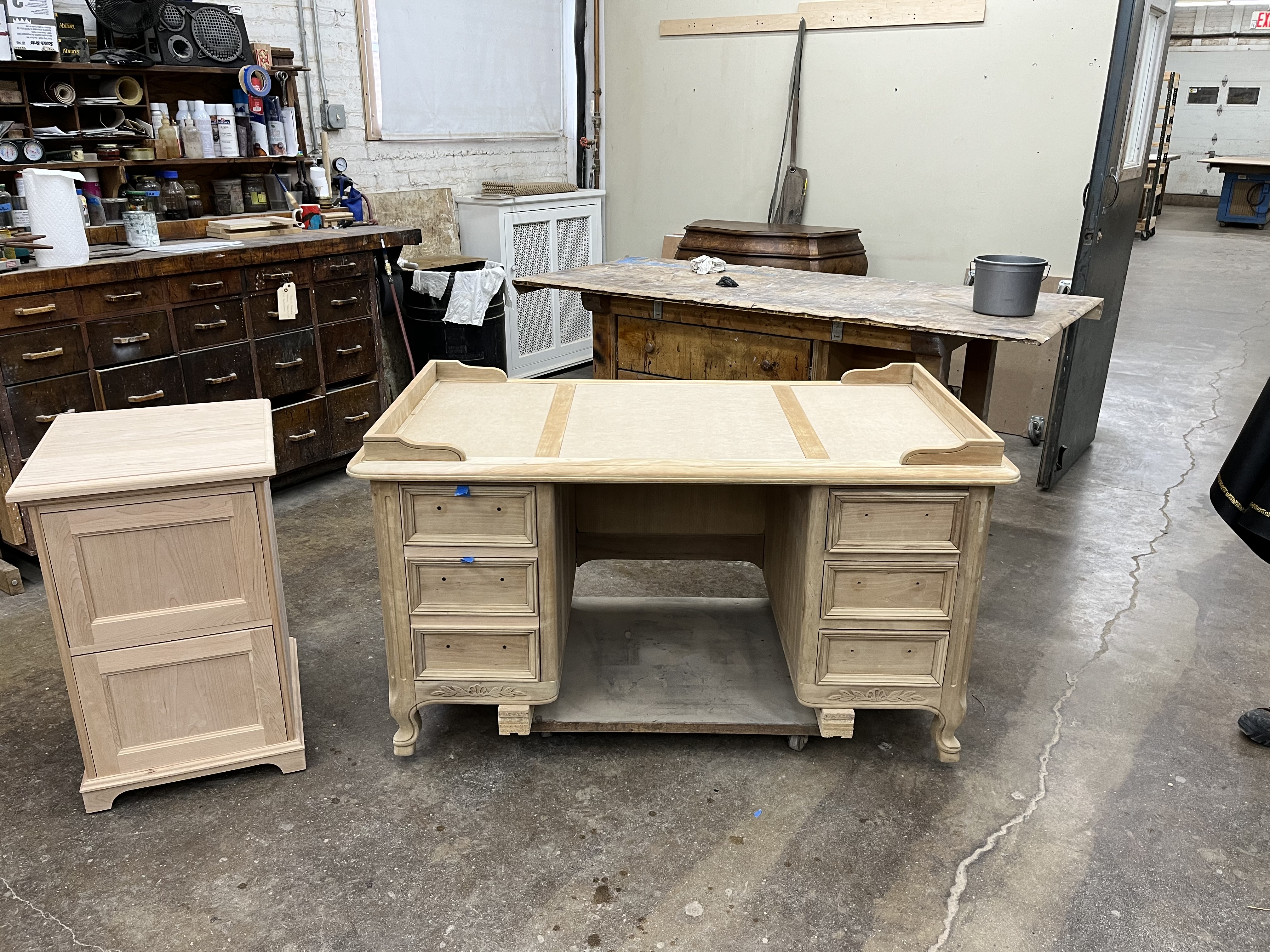
My first engagement with Devontry Fine Woodworking was naive. I thought I was dropping off a desk for restoration. What I was really doing was entering a transformation journey.
Jim Tudor and his workshop were highly recommended by my personal network. A family friend, with great taste and an inventory of family heirloom furniture, will only let Devontry restore the pieces. My brother and mother also had Devontry restore pieces that turned out beautifully. In my mind, we didn’t need a vetting process.
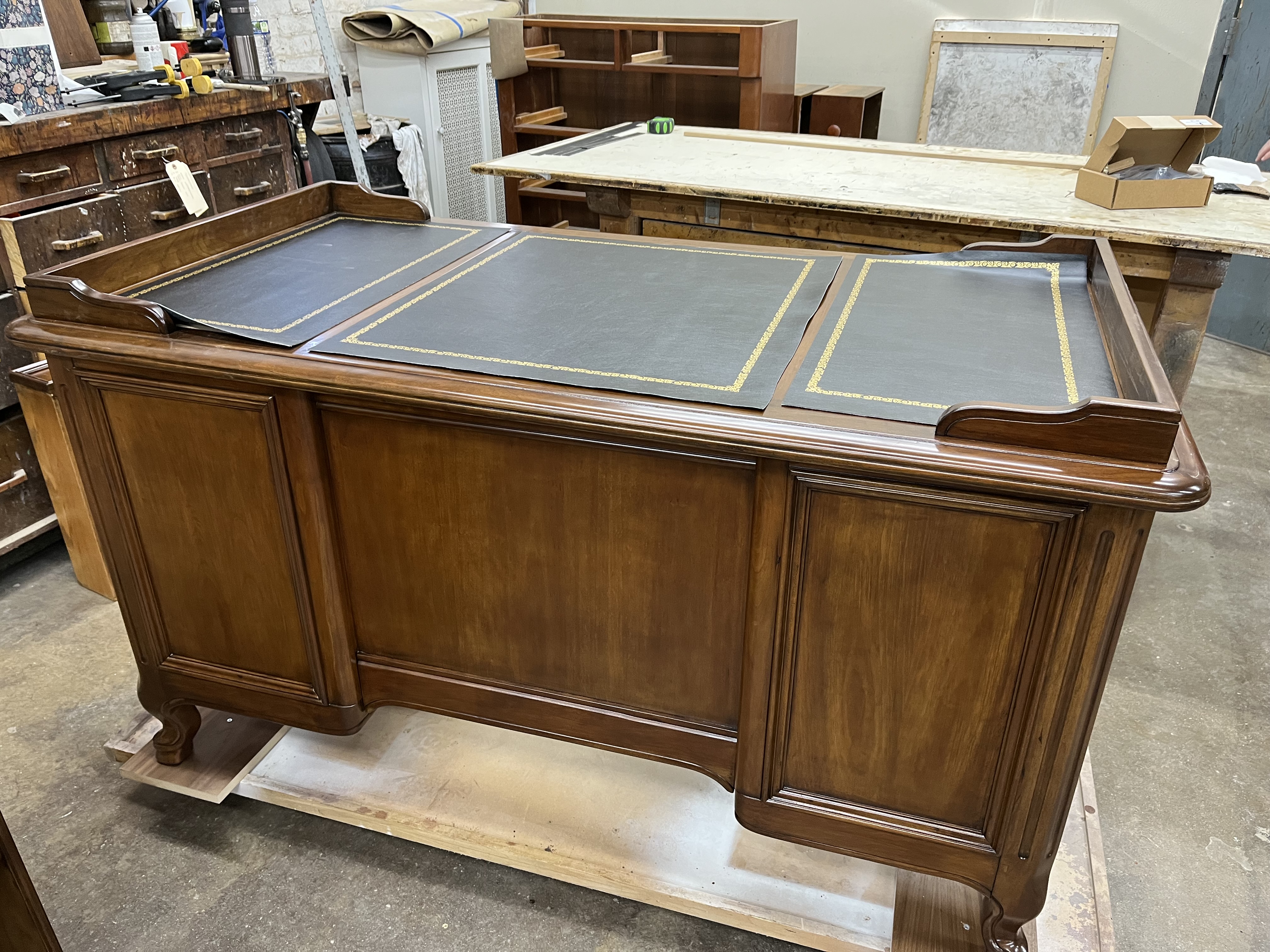
At Jim’s request, this was my turn to tell the story of the treasured old desk that belonged to my Aunt Margaret. As she prepared to pass on from this life, she promised to be the heavenly patron of my business. Aunt Margaret marked the occasion by leaving me her well-loved work desk as my work desk. The beautiful traditional wooden piece had lost its varnish, especially in the spot where her arms rubbed off the finish from years of daily use. Gold leaf leather, protecting the main workspace, had become dull and worn. The desk even featured a built-in cabinet that housed an old-fashioned typewriter and mechanical arm that allowed you to pull it up and out so you could employ the technology and stow it when not in use.
A Restoration That Became a Transformation
Jim examined the desk lovingly. He called some of his craftsmen over to admire its features and check out the hidden mechanics and prior craft decisions that only masters in the trade would recognize. After the initial “job interview” as Jim calls this part of the process, he gave me a thorough tour of the workshop showing me each stop the desk would make on its journey to revitalization. Along the way, he educated me on the differences in thinking and skills involved in cabinet making and finishing. He personalized the journey to signal the decisions that would need to be customized to work for Aunt Margaret’s desk. These decisions involved aesthetics, functionality, and investment costs. Jim assured me he would give me options and recommendations, based on my goals and budget, the foundational quality of the desk, and what experience taught works well.
Meeting Jim Tudor and the Devontry Way
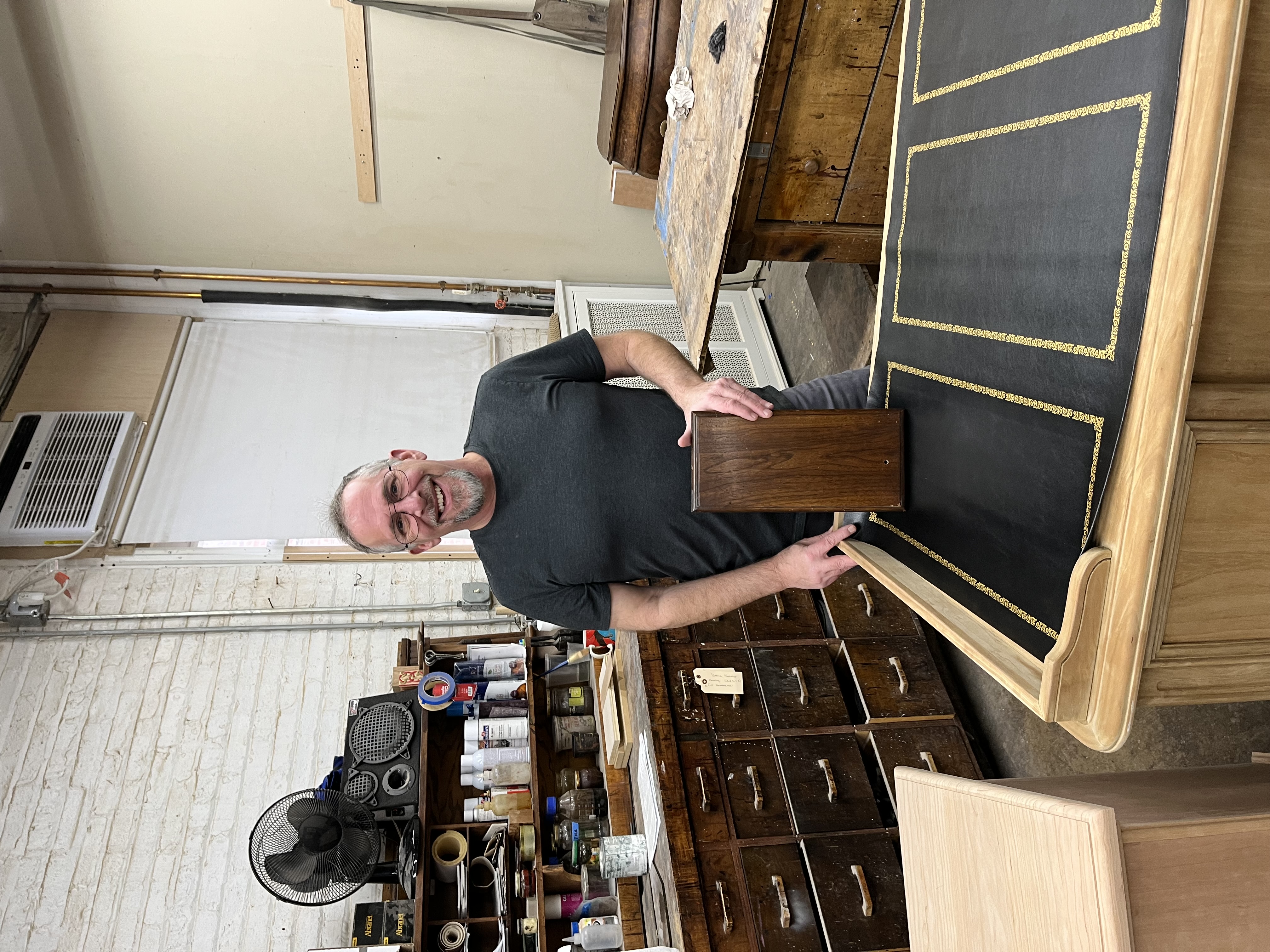
On the tour, I met all the “boys” as Jim calls his craft workers. He introduced each by name and identified their special talents. They proudly showed me pieces coming to new life for other clients. One involved an old tree stump that once supported a yard swing for a little boy who spent hours dreaming and swinging from the tree. The little boy had now grown up and became a corporate executive who always wanted to remember and realize his dreams. When the tree showed signs of decay and was struck by lightning, the man wanted to retain its value to him. He called Devontry for help.
What about Jim and his story and the story of Devontry? Turns out, Jim, like many innovators and entrepreneurs, had a particular craft and passion “in their blood” before they realized it. Jim’s was literal. His great-great-great…grandfather, Deacon Samuel Chapin, a founder of Springfield, MA, was a cabinet maker whose works found their way to museums and private collections. Another relative, Herman Chapin, founded and led a tool-making company that he later sold to Stanley® Tools.
Jim’s Backstory: Gifts, Grit, and Self-Made Mastery
Jim did not know any of this until after he started his own company. As a kid, all he knew was that typical school was not his cup of tea. He sped through high school requirements so he could go to work at 11am, 5 days a week, and on Saturdays, at a local furniture stripping shop. He apprenticed himself to Dave, the owner, whose devotion to detail inspired Jim to record Dave’s approach that would later contribute to the unique methods Jim uses to this day. In addition to a process, Dave taught Jim how to use the right tools for the right tasks, how to keep the workshop clean, and how to keep the shop and records organized.
After his day job, Jim worked evenings in a local finishing shop. By the time he was 16 years old, he knew he would own a company in the craft of fine furniture woodworking. When Jim was not at one of the workshops, he read everything he could get his hands on about the craft. He also wrote handwritten letters to master craftspeople featured in the books, asking them questions about techniques and foundational principles critical to design and mixing formulas. Almost all answered his letters. While traditional school was not Jim’s path, he was a magnificent learner, hungry for knowledge and excellence.
Jim was humble enough to know he had natural gifts and a passion, and he needed skills and discipline to turn raw talent into craft excellence and a sustainable business, and way of doing business. He created his own form of “schooling,” primarily based on learning-by-doing on the shop floor, independent study, and asking for guidance from mentors.
The Craft, the Craftsmen, and the Stories They Carry
After starting his own business, specializing in stripping and finishing millwork within homes, Jim met another mentor, Joe, the founder of Devontry. Jim told Joe he wanted to work for Devontry, and Joe hired him as Head Finisher, working side-by-side for 6 years. Joe had his own ways of helping Jim develop his craft and confidence.
One day, Joe got a call from a lady in a wealthy suburb of Chicago who had just had one of her kitchen cabinets replaced. Naturally, the finish did not match her original cabinets at all. Joe told Jim to pack up a kit and come with him.
“Do we know what colors we need to match?” Jim asked.
“No,” Joe replied. “Let’s go.”
When they arrived, the woman was away and left a way for them to enter. They looked at the cabinets, realizing they had no colors they needed to do the job. Joe informed Jim he had other appointments and would be back in 2 1/2 hours. Using his foundational knowledge and practical creativity skills, Jim opened the kitchen cabinets looking for sources he could repurpose and mix into a stain that matched the older cabinets.
Coffee grounds became a base. Onion skins in a drawer added tone. A bit of Van Dyke brown stain filled in the gaps. When Joe pulled up 2 1/2 hours later, Jim was sitting on the curb with his kit.
“You finished, kid?” Joe asked.
“Yeah, Pops, you want to go in and check it?”
“Naw. I know you did good work.”
Later that day, the woman called to say her husband returned from a trip, looked around the kitchen, and could not discern which cabinet had been replaced. They matched exactly.
Building a Business Through Creativity, Mentorship, and Heart
A few years later, Jim left Devontry. His wife convinced him he needed better hours and more regular work, so he went to work repairing and touching up pieces for a national furniture chain. Jim was bored and felt no encouragement for his creativity.
After a couple of years of misery, Jim went back to Joe and asked for his blessing to start his own non-compete business 30 miles away from Devontry. Jim did well on his own, but then Joe became sick and needed Jim to manage his business.
For six years, Jim drove back and forth between the two companies, managing both. Eventually, Jim bought Devontry, leaving behind his own business, and taking Devontry to the next level. When Joe recovered, he came to work for Jim, switching roles and terms of endearment. “The kid” now reminded “Pops” to sweep the floor.
Jim’s mindset of family applies to his employees. Clients know employees by name. Employees know each piece of furniture by name, treating them with respect and recalling the story of each piece.
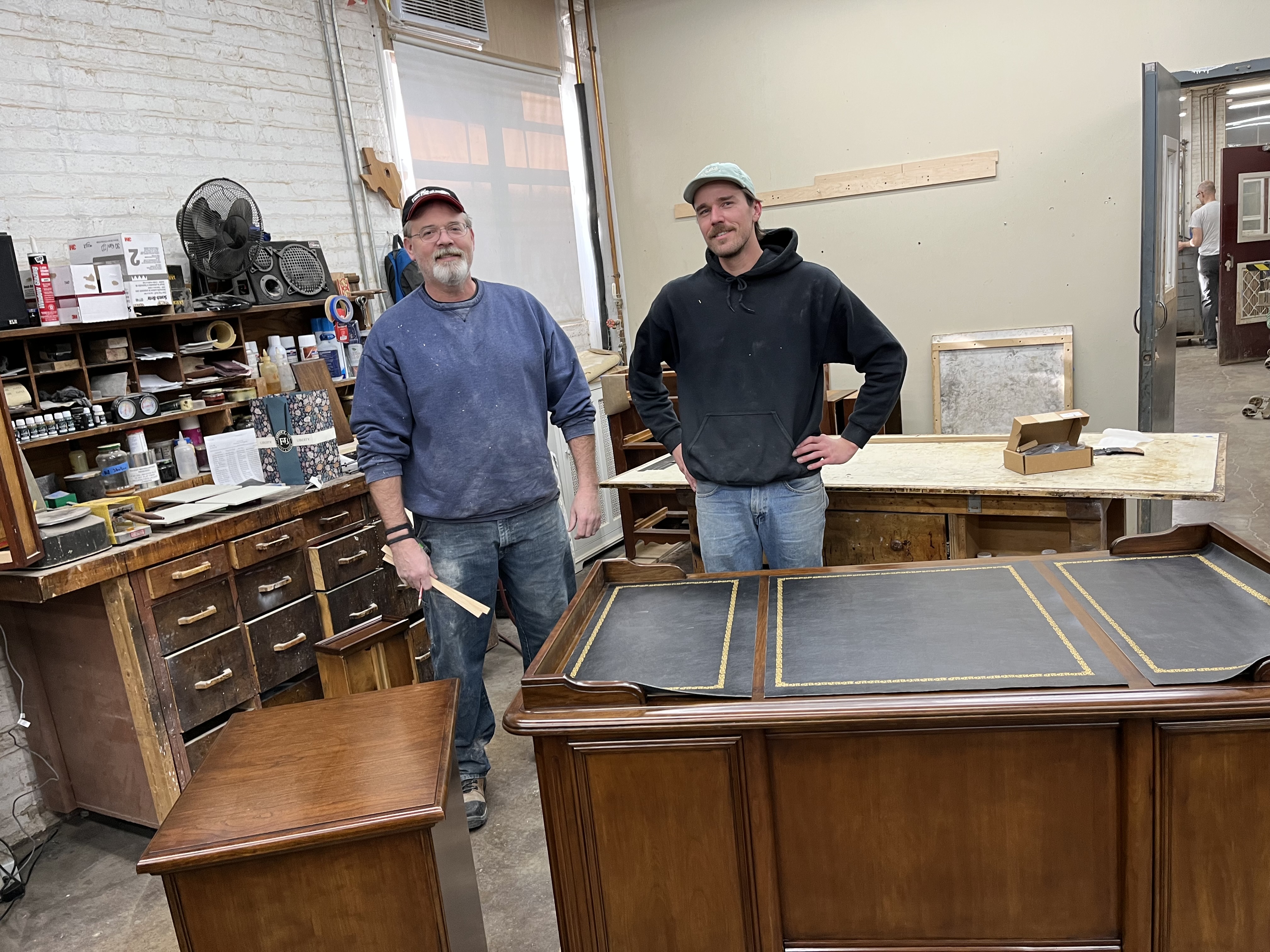
When I went back for “presentation day” for my desk, I met each craftsman who had worked on it. They told me what they did, why they did it, what they learned, and what they loved. Their eyes shined, especially when they spoke about hidden challenges they solved while keeping the desk’s origins in mind.
The Principles Behind Crafting a Business That Lasts
Jim reveals that Devontry’s marketing secret is that it is the best kept secret on the North Shore of Chicago. Fortunately, he is quick to follow, people are bad at keeping secrets. The “secret” now expands across the United States, with clients shipping entire dining room sets from New York for Jim and his crew to refurbish.
Jim has an uncanny ability to integrate tasks and move between mindsets required for each part of the business. He tells clients that when he sits behind his business desk, working up proposals, doing accounting and other tasks, he is at work. When he steps onto the shop floor, he is having fun.
There is another time when both sides of Jim’s brain work together. He often stays up until 11pm hand drawing designs for each project. Inevitably, he runs across a complication that requires more than linear thinking. He sleeps on it and wakes up around 3am with the solution in mind. He calls the hours between 3am and 5am his most creative hours of the day. This fruitful routine stems from letting the creative process go and not trying to force things. It also emerges from his innate giftedness and daily use of tacit knowledge, never having been “taught” some of these things.
One of Devontry’s young craftsmen had written a masters’ thesis on the Golden Ratio. Mathematically, the Golden Ratio is the number 1.618 and is usually represented by the Greek letter Phi. What it means is the proportion in which a line segment is divided into two unequal parts such that the ratio of the whole segment to the longer part is equal to the ratio of the longer part to the shorter. It is an ancient discovery that shows up repeatedly in nature, geometry, architecture and in beautifully designed things. Looking at Jim’s hand drawings, the man asked Jim about his use of the GoldenRatio. Jim asked, “What’s the Golden Ratio?”
Looking Through The Third Angle Lens
Jim and his backstory have amazing elements to be sure. At the same time, Jim is simply and intrinsically exercising principles we see embedded time and time again in serially successful and happy innovators and entrepreneurs – even within those who are innovative and entrepreneurial in the everyday life of big companies.
Their lessons for doing business include the following:
- Use your innate gifts
- Develop those gifts into skills, discipline, and mastery
- Work with love for the people and project at hand, including seeing potential for the origin meeting the future
- Allow secrets to spread through people sharing their remarkable experiences
- Learn from others, and design environments for others to adopt these lessons
You have all you need to transform your business into a fine craft. Begin with your gifts.


%20copy.png)


